Domestic and Exotic Hardwoods
This section is meant to familiarize you with the different types of wood used in these boards. This is certainly not a complete list. Though, these are the ones I am most strongly attracted to.
Wood I build with
Every board starts with domestic hardwoods. Maple, walnut, and cherry do most of the work. Exotics show up as contrast — a stripe, a field, a face you notice from across the kitchen. Names on this page are families, not promises that every board uses only one variety. Wood is a crop. Color, figure, and hardness shift from tree to tree. That is the point of a one-off board.
Maple
Maple is not one wood. What most kitchens mean by maple is hard maple (sugar maple). It is pale, dense, and tight-grained. It dulls a knife less than a soft wood, it takes abuse, and it stays light after oiling. When I want a board that will be chopped on every night, hard maple is the field.
There is also soft maple — red maple, silver maple, and related trees. It looks similar at a glance: cream to light tan, sometimes with gray or green streaks. It is easier to work and often a little warmer in color, but it is not as dent-resistant. I use it where the board is more serving than butchering, or where the figure is too good to waste.
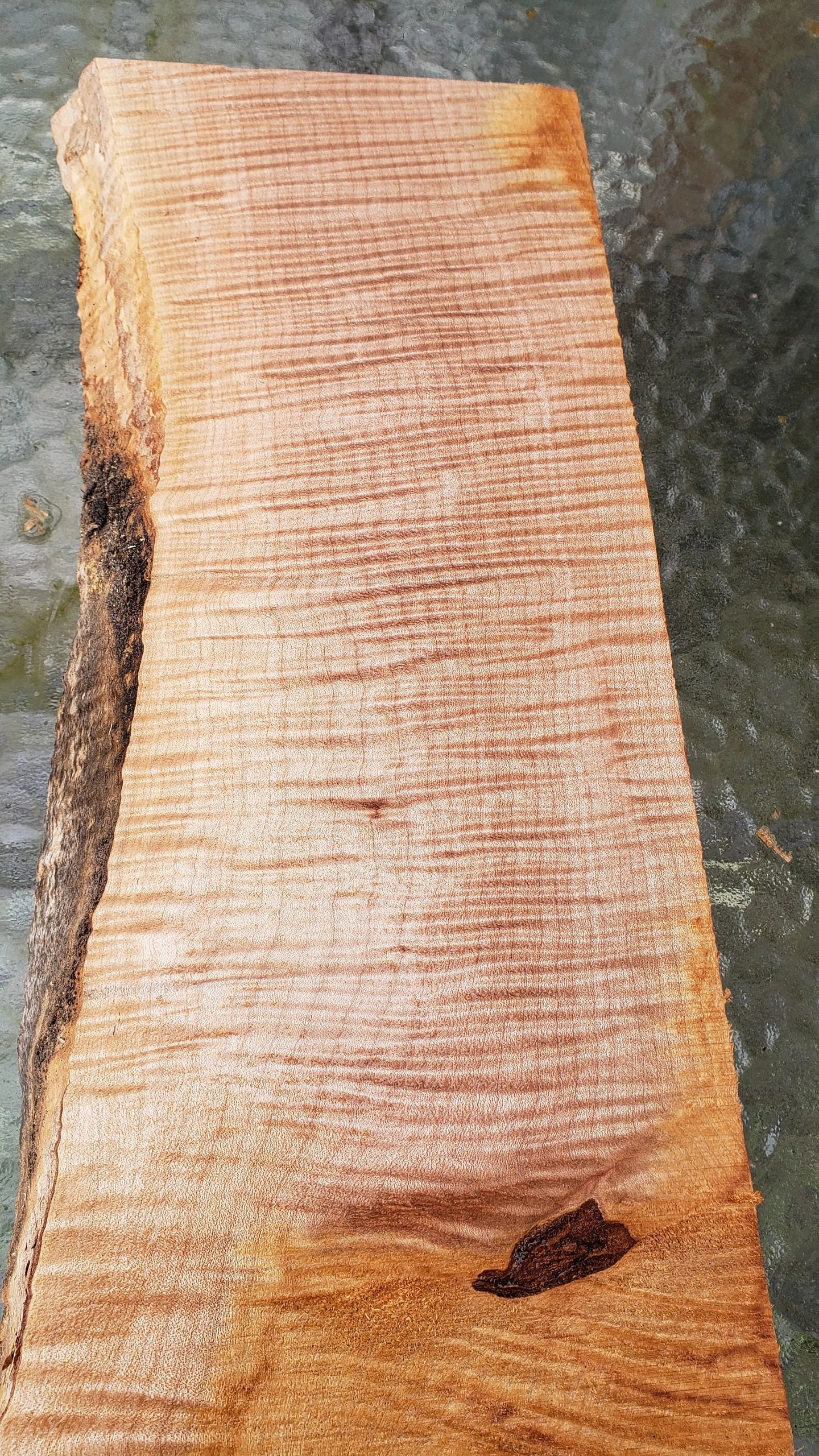
Figured maple is the same family with a different face. Curly (tiger) maple has waves that move in the light. Birdseye is a field of small eyes. Ambrosia maple is streaked brown and gray where beetles and fungus stained the sapwood — dramatic, still maple, not a defect I hide. Spalted maple is further along that path: black zone lines and pale rot-figure. Spalted stock has to be sound enough to glue and finish food-safe. If it is punky, it does not go in a cutting surface.
On a listing I will say hard maple, curly maple, ambrosia, or spalted when that is what you are buying. “Maple” alone means the pale working wood, usually hard maple.
Walnut
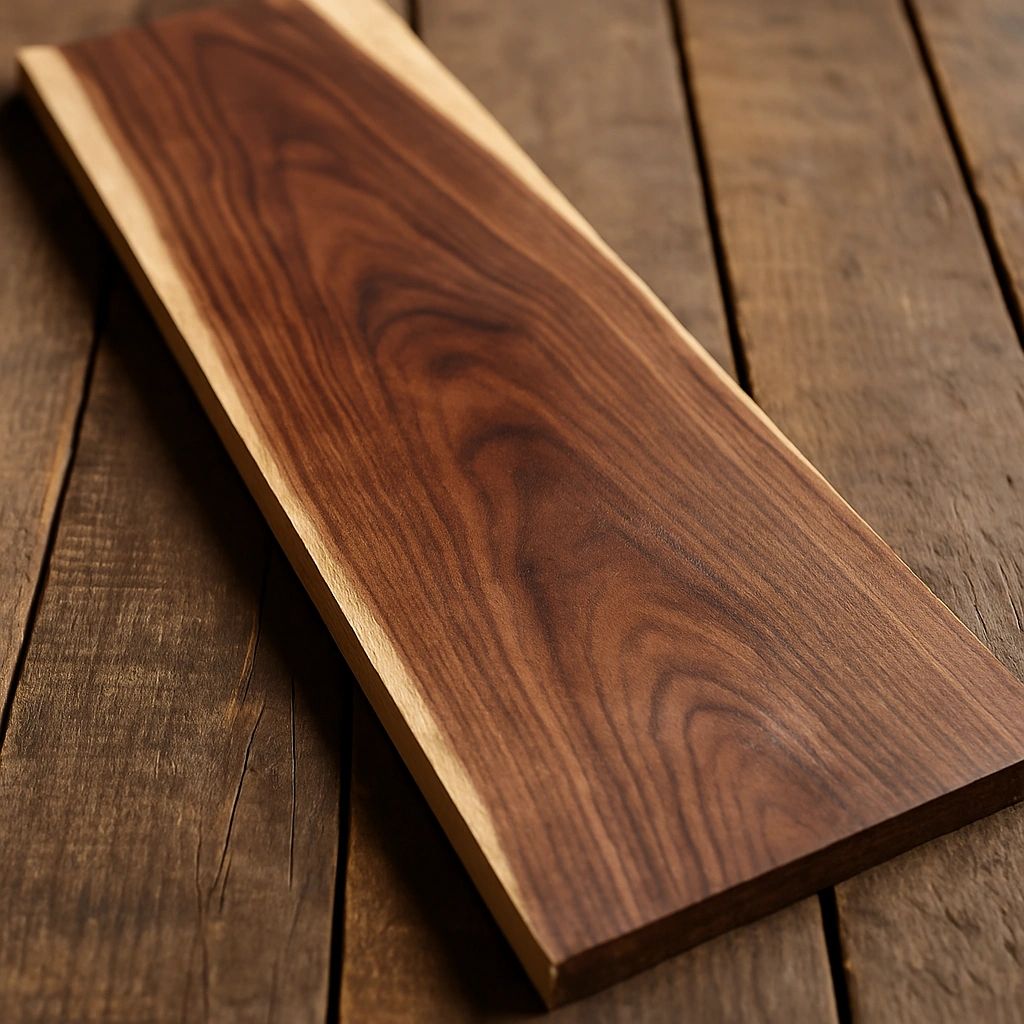
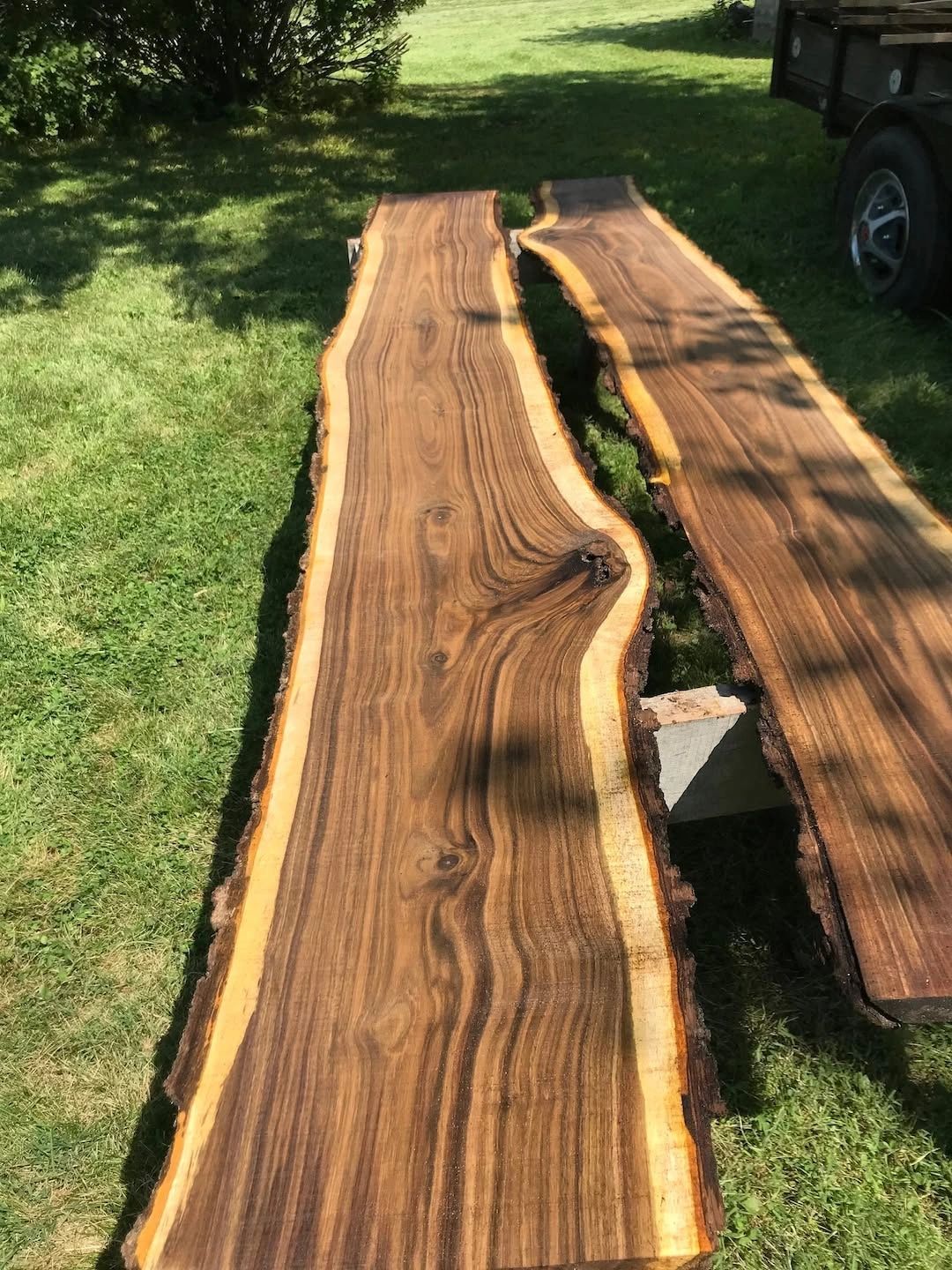
The walnut most people know is American black walnut. Heartwood runs chocolate, coffee, and sometimes purple-brown. Sapwood is cream. A board that shows both is still walnut; I do not stain the sapwood to fake a richer tree. Black walnut is strong enough for a working board, oils to a deep sheen, and reads as the “expensive” domestic without being exotic.
Other walnuts show up when the piece earns it. Claro walnut (often from the West Coast) can be louder — richer browns, more swirl, more contrast. English walnut is usually milder and grayer-brown. Butternut (white walnut) is lighter, softer, and better as accent than as the only wood on a heavy-use board. Figured walnut — crotch, feather, or heavy grain chatter — is for faces and serving pieces more than for a daily end-grain chopper.
If the listing says walnut and does not specify, it is American black walnut. If it is claro, figured, or mixed with a lot of sapwood, that will be in the title.
Cherry
The cherry I use is American black cherry, not “Brazilian cherry” (jatoba), which is a different, much harder tropical wood. True cherry starts salmon to honey-red and darkens in daylight. The board you take home will not be the same color in a year. That aging is why cherry looks like furniture instead of craft-store stain.
Grain is usually quiet and even. Occasional gum pockets or small pin knots are normal. Cherry is excellent for face-grain and edge-grain boards and for pinstripes against maple. It is a bit softer than hard maple, so a pure cherry end-grain slab is a choice for looks and feel, not maximum dent resistance.
Exotics
Exotics are the woods most people do not see at the grocery store. I use them for contrast: a stripe, a panel, a face that makes the maple or walnut work harder. A board that is all exotic is a choice, not the default. Density, oil content, and color shift from species to species. What follows is the set I reach for most. If a listing names one of these, that is the wood in the piece.
Wenge
West African, almost black-brown with fine pale streaks. Heavy, open-pored, and dramatic next to maple. The pores want oil. On a cutting surface it reads as the dark bar in the design. Splintery to mill; calm on the finished board.
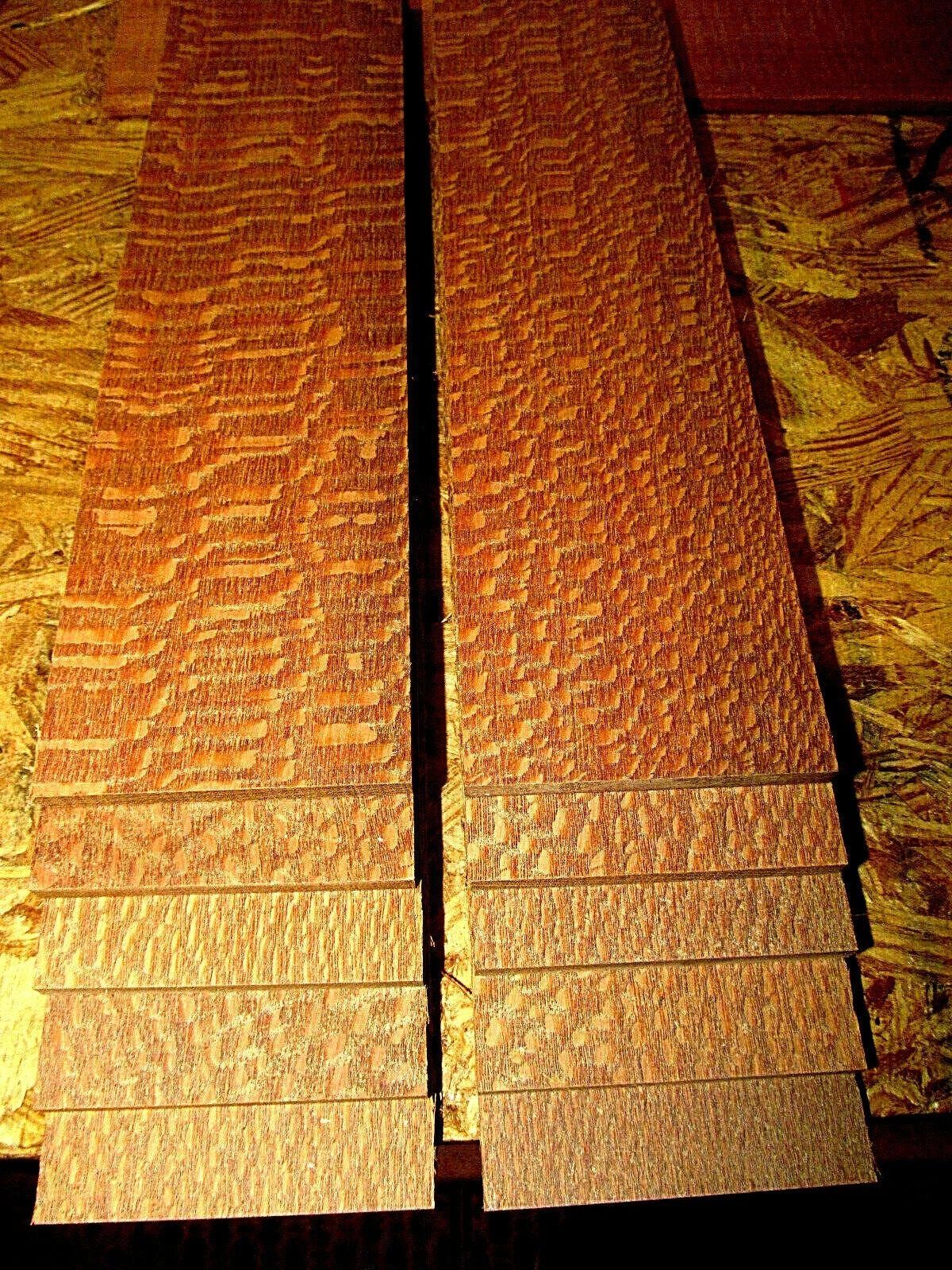
Leopardwood
South American, with a flecked “cat-spot” figure that looks like scales in the light. Brown on brown. The spots are the point. Better as a face or a wide stripe than as a huge end-grain field, where the figure can get busy.
Padauk
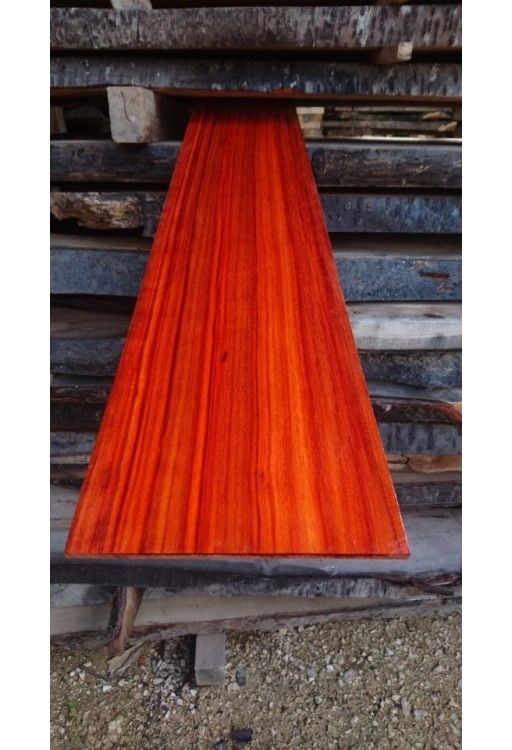
West African. Fresh-cut it is electric orange-red. Light and air mute that toward russet and brown, so the board will not stay “new padauk” forever. I use it knowing it will calm down. Hard, stable, and a clear contrast against maple.
Purpleheart
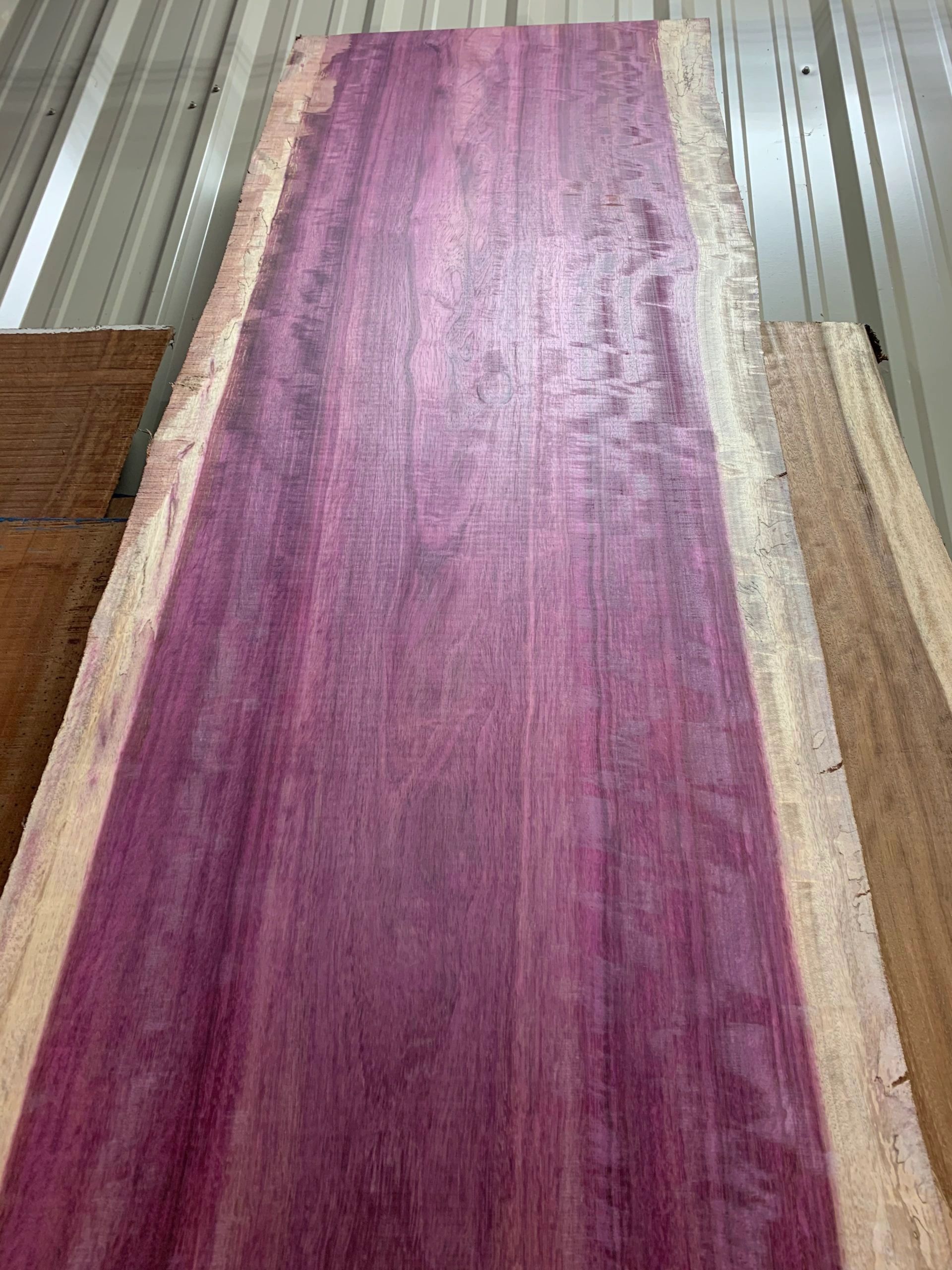
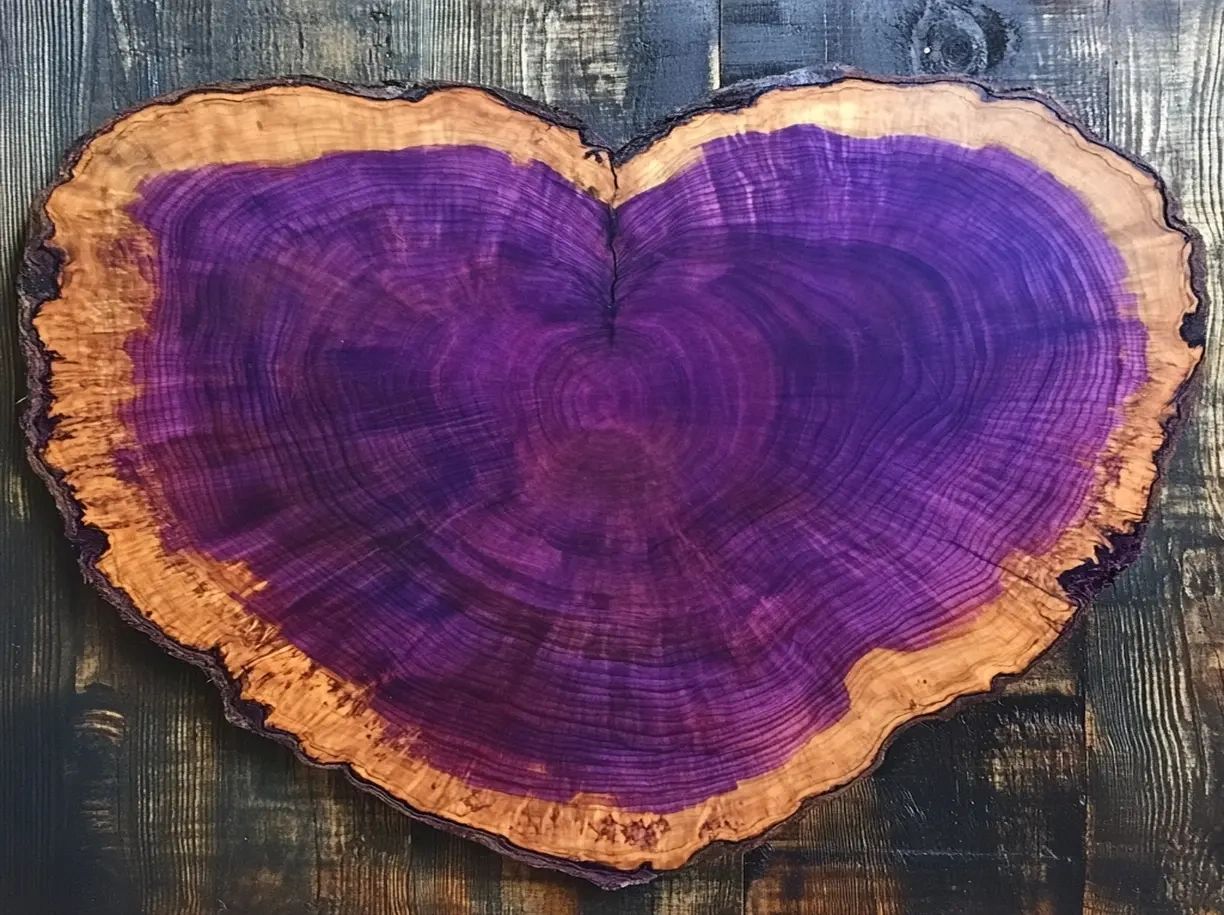
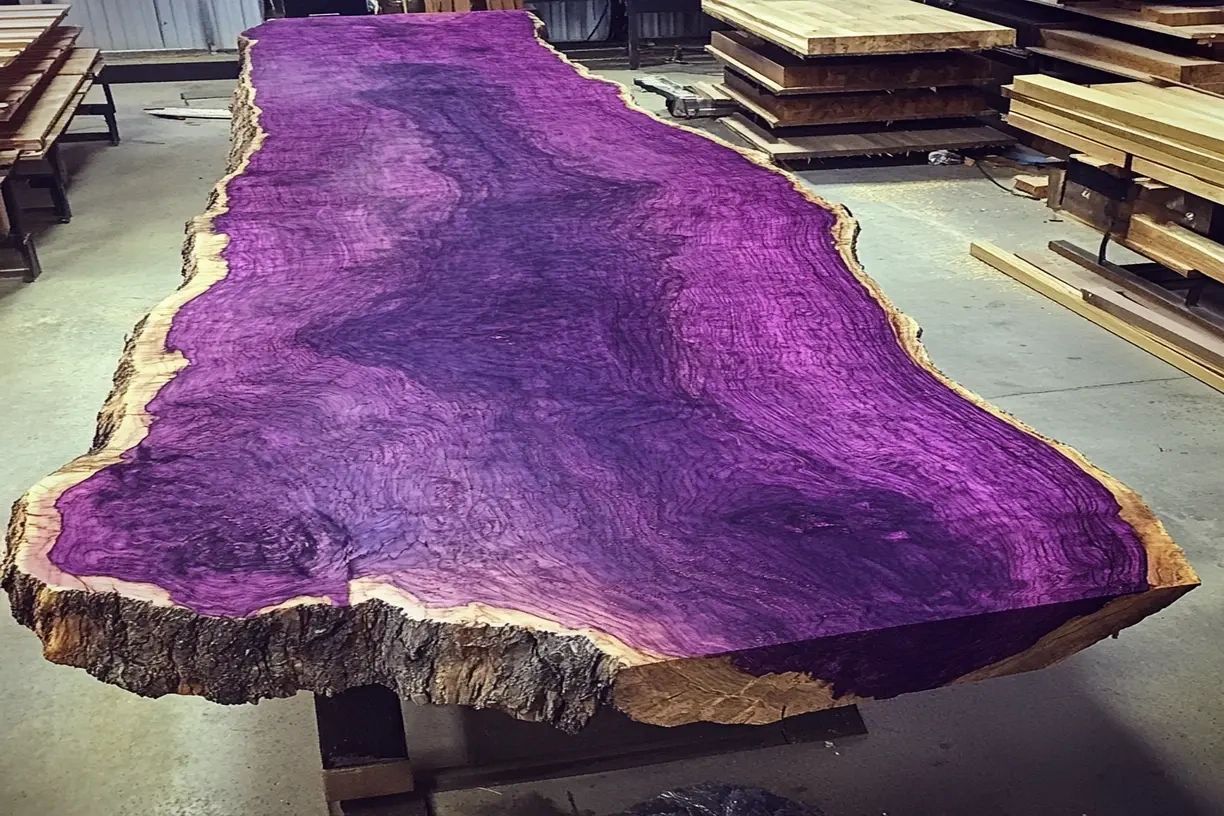
Central and South American. Starts brown and turns deep purple after light and air — the opposite of padauk’s fade. Very hard. A little goes a long way: thin lines or a panel. A whole purpleheart slab is a statement piece more than a quiet daily board.
Zebrawood
West African, pale gold with bold dark stripes. The stripes are the design. Too much zebrawood can look like costume grain; a controlled panel or a few bars next to maple is usually stronger. Hard and a bit brittle on the edges if the glue-up is careless.
Other woods you will see on a listing
- Bloodwood — deep red, dense, used like a jewel stripe.
- Bocote — Mexican/Central American, brown with dark eyes and ripples. Looks expensive because it is busy in a good way.
- Canarywood — yellow to orange with red streaks. Bright next to walnut.
- Jatoba (Brazilian cherry) — not true cherry. Salmon to brick red, very hard. I will call it jatoba, not cherry.
- Sapele — African mahogany cousin, ribbon stripe, reddish brown. Quiet exotic.
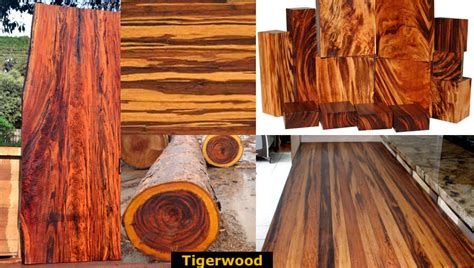
- Tigerwood (gonçalo alves) — dark stripes on a copper field. Similar job to zebrawood, usually a bit richer.
- Yellowheart — clear lemon-gold. Thin lines. Fades some in strong sun.
- Teak — oily, golden-brown, famous on boats. Fine for serving; the oil can fight glue if it is not prepped.
- Ebony (when I use it) — near black, scarce, small accents only.
Some tropicals are closed-grain and glass-smooth. Others are open-pored and need extra oil, same as wenge. All of them on a Toolbox Whisperer board are finished food-safe with mineral oil and beeswax on the cutting surface.
How I mix them
Maple, walnut, or cherry is usually the structure. An exotic is the voice. A title that reads Wenge & Maple means you will see both. A title that is only the exotic means that wood is doing most of the face. Color will shift after a few months in a bright kitchen. That is hardwood, not a defect.
If you want a board built around one exotic — a purpleheart field, a leopardwood face, a padauk stripe. Mineral streaks, sapwood, and figure stay in the piece.
If you want a board built around a particular maple or walnut — curly, ambrosia, claro, extra sapwood — email and ask. I will tell you what is on the rack.
This website uses cookies.
We use cookies to analyze website traffic and optimize your website experience. By accepting our use of cookies, your data will be aggregated with all other user data.